A
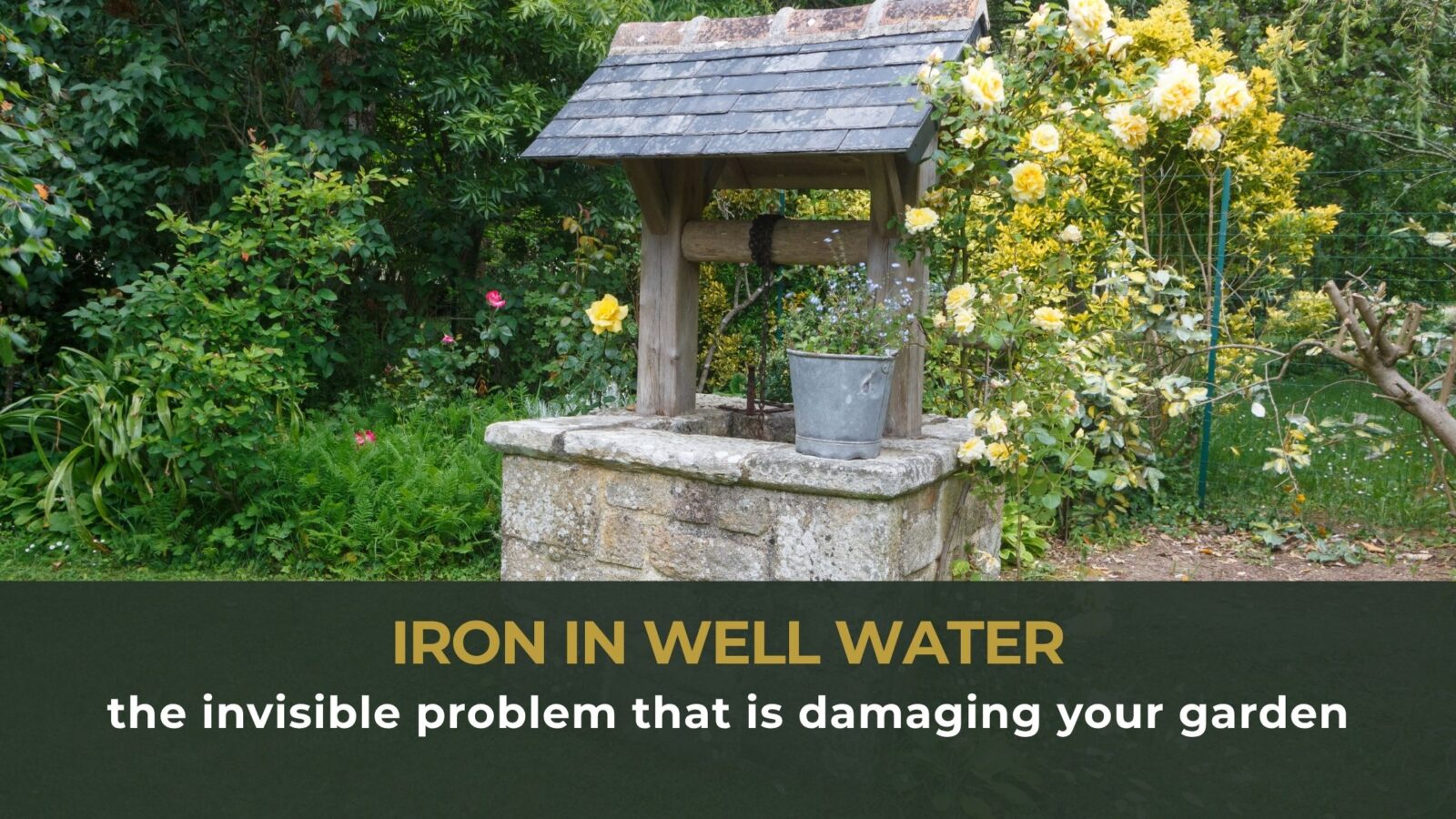
Has anyone ever explained to you how iron in well water can become a problem in your garden?
There is a problem lurking in the gardens of Forte dei Marmi and throughout the Versilia plain, and one that is all too often diagnosed too late — or diagnosed incorrectly.
The leaves of plants gradually become dull, lose their shine, and develop a brownish or orange tinge that at first looks like nothing more than dust or dirt. The plants continue to grow, but they always seem a bit lacklustre: less vigorous foliage, reduced flowering, and a general quality that slowly deteriorates without any clear reason.
In many cases, the cause lies in the water. Not water in a general sense, but well water — that precious and almost essential resource in large gardens in an area where watering via the mains would cost an unsustainable amount.
In many areas of Forte dei Marmi, groundwater contains high concentrations of dissolved iron. This iron is invisible when the water is pumped — it comes out clear, seemingly perfect — but it becomes a problem as soon as it comes into contact with atmospheric oxygen.
How iron damage works
The iron in well water is in a reduced form — soluble, invisible. The moment it is distributed by the irrigation system and comes into contact with the air, it oxidises: its chemical state changes and it precipitates in the form of solid particles of ferrous oxide. It is the same process that causes metal exposed to the air to rust. In an overhead irrigation system — using static or dynamic sprinklers — these particles settle on every surface the water touches: paving, low walls, furniture, and above all, leaves.
On the leaf, the damage is more profound than it appears at first glance. Leaves are not merely decorative surfaces: they are highly specialised biological organs, the plant’s true operational centre.
It is through the leaf surface — and in particular through the stomata, the microscopic openings that regulate gas exchange — that the plant breathes, absorbs carbon dioxide, releases oxygen and controls transpiration.
When ferrous oxide deposits accumulate on the leaves, these exchanges are progressively hindered. The plant does not stop functioning, but it functions less efficiently: it exchanges fewer gases, regulates water loss less effectively, and becomes more vulnerable to summer heat stress and secondary fungal diseases.
The process is slow and insidious. Symptoms do not appear the day after the first watering with iron-rich water: they build up season after season, so gradually that they are often attributed to other factors — fertilisation that needs reviewing, a warmer-than-usual season, a plant that ‘isn’t thriving there’.
By the time the problem is finally correctly identified, years of incorrect watering have already caused structural damage to the plant, which requires time and targeted interventions to recover.
How to tell if there is an iron problem in the water
The first check is visual: if the areas around the sprinklers show orange or reddish patches, if the ground turns colour where the water falls, or if the leaves of plants watered from above have a dull film that doesn’t disappear even after rain, iron is almost certainly to blame.
But the definitive test is a chemical analysis of the water — a relatively simple and inexpensive test that measures iron, manganese, pH, salinity and other parameters relevant to the health of the garden.
Water analysis is one of those tools that, in Versilia, should precede any serious garden or planting project, yet is often skipped in the rush to start work.
Knowing the chemical composition of the available water before choosing plants, before planning the layout and before preparing the soil allows you to avoid mistakes that inevitably emerge too late.
The solutions
There are two main approaches, and they are often used in combination. The first is a system-based approach: filtration or iron-removal systems installed upstream of the irrigation system, which reduce the iron content before the water reaches the plants. These are effective solutions but they come at a cost and require regular maintenance. The second approach is design-based: reducing or eliminating direct foliar irrigation, favouring sub-irrigation systems that deliver water directly to the root system, beneath the foliage. With sub-irrigation, the water never comes into contact with the leaves — the problem of iron deposits on the vegetation is eliminated at source.
Sub-irrigation has some limitations in the early stages of planting, when the roots of newly planted trees and shrubs are still shallow. But for established trees and shrubs, it is an elegant and permanent solution, which simultaneously eliminates the problem of foliar iron and reduces water consumption through a drastic reduction in evaporation losses.
Manganese, which is often found alongside iron in the Versilia groundwater, causes similar problems but manifests differently: it interferes with the absorption of other nutrients and causes yellowing and stunted growth, which are frequently mistaken for iron or nitrogen deficiencies, leading to incorrect fertilisation that solves nothing.
Would you like to analyse the quality of your well water or assess your existing irrigation system?