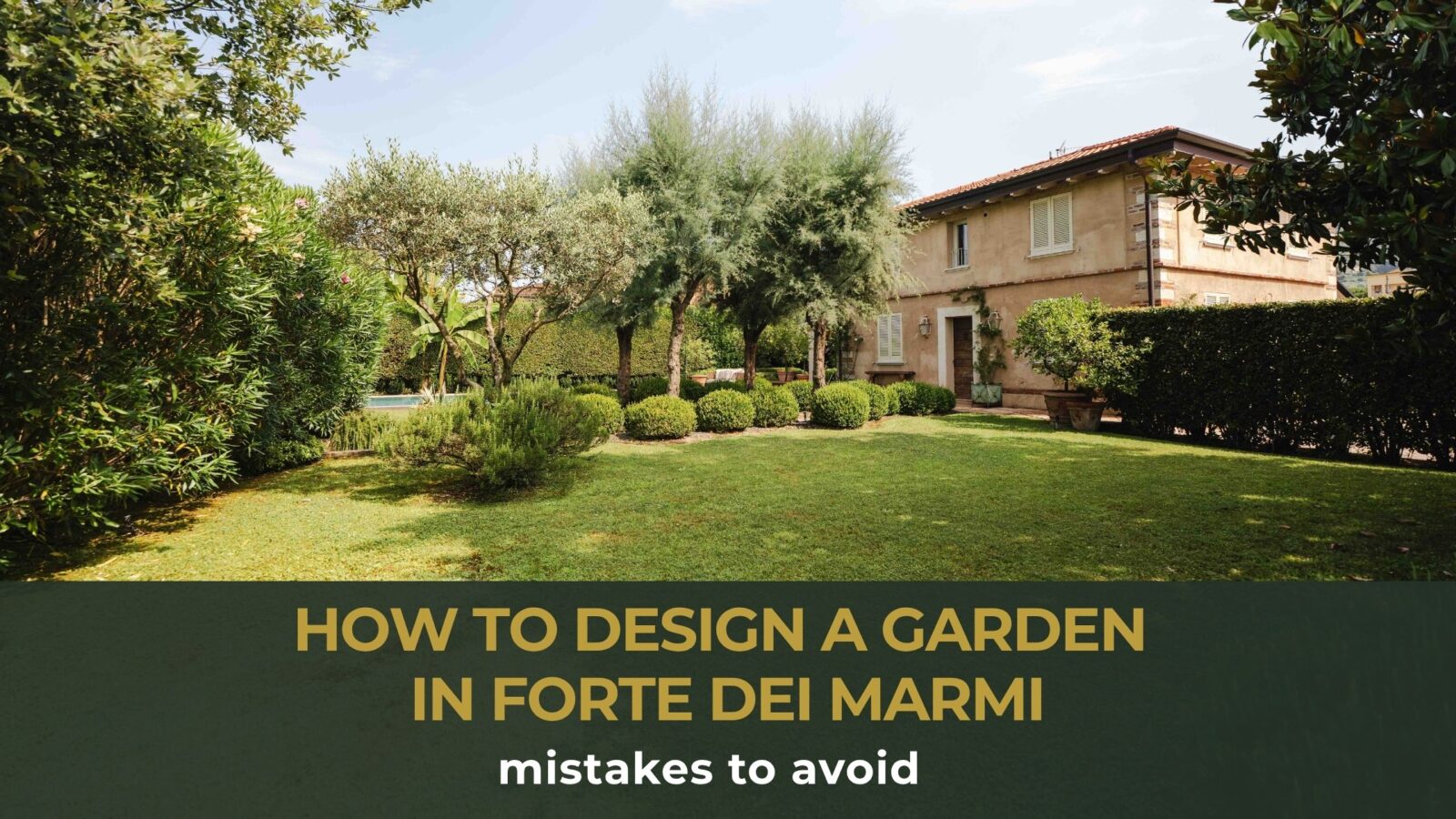
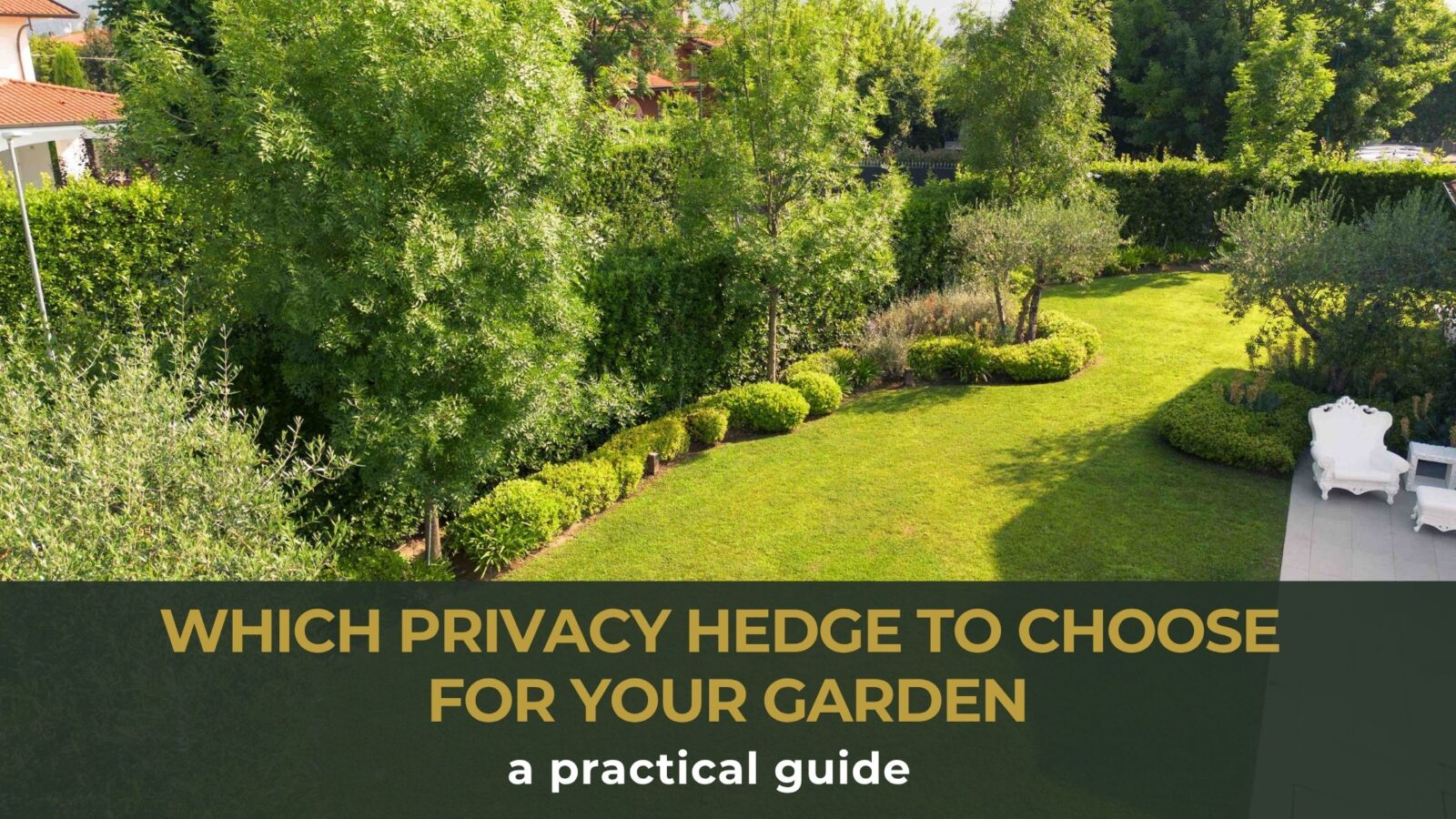
The privacy hedge is probably the most sought-after plant feature in the gardens of Forte dei Marmi and throughout Versilia.
The villas of Versilia are often built on plots that are relatively small compared to the scale of the buildings they house, with boundaries running just a few metres from swimming pools, conservatories and outdoor living areas. Those who live in these spaces seek privacy, and a hedge is the plant solution that guarantees it in the most natural and long-lasting way.
This need gives rise to very specific requirements: tall, dense from the base, compact, and ideally fast-growing. The client wants screening immediately, not in ten years’ time. And this is precisely where the most common design misunderstanding arises: growth rate and long-term stability rarely go hand in hand.
Plants that grow faster almost always require more maintenance, more water, more pruning, and in some cases are also more vulnerable to diseases and environmental stresses typical of the Versilia coast.
Privacy hedges that work — and why
The cherry laurel is probably the most balanced choice for most gardens in Versilia. It grows well, tolerates sandy soil and local conditions, copes with both direct sun and partial shade, retains a full and vigorous appearance even after heavy pruning, and shows no particular vulnerability to salt spray in locations not directly exposed to the sea.
Its large, glossy leaves immediately convey a sense of rich, compact foliage, much appreciated in residential settings. It may not have the elegance of more refined species, but it is reliable: and in a context where conditions are often challenging, reliability is a value that should not be underestimated.
Eugenia myrtifolia — Syzygium paniculatum — is the preferred choice of the most discerning landscaping professionals when seeking something aesthetically more refined. Its small, glossy leaves, very compact foliage, good resistance to salinity and excellent response to frequent pruning make it suitable for both formal hedges in contemporary settings and more natural compositions. It maintains good density even in the lower part of the foliage — a fundamental characteristic for a hedge that needs to ensure privacy — and does not tend to become hollow inside, as happens with other species after pruning.
Eleagnus x ebbingei deserves special consideration for locations most exposed to wind and sea spray. It is a technically excellent species but less fashionable than others: iridescent silver-green leaves, modest but highly fragrant autumn flowering, and remarkable resistance to harsh coastal conditions.
In mixed hedges, it acts as a structural element that lends strength to the whole, and in locations where other species struggle, it is often the only truly reliable choice.
Pittosporum — Pittosporum tobira in particular — is a Versilia classic for good reason: balanced growth, glossy evergreen foliage, fragrant spring flowering, and excellent salt tolerance.
It works well as a free-standing hedge or as a solitary shrub, and in locations most exposed to the sea it provides a continuity that many other species cannot offer.
Hedges that disappoint — and why
Leyland cypress is the choice for those seeking quick results: it can grow up to a metre and a half a year, reaches significant heights in a short time and creates compact, effective green screens for visual privacy. Its limitations, however, become apparent over time.
Leyland cypress suffers particularly from water stress and incorrect pruning: if not maintained properly — with balanced watering, appropriate fertilisation and regular but gentle pruning — it tends to hollow out internally, leaving dry patches that can no longer regrow. A neglected Leyland cypress becomes, within a few years, a barrier with gaps, aesthetically disappointing and difficult to restore.
The photinia — with its bright red young leaves in spring — is highly prized for its visual appeal but often proves disappointing in the long term in Versilia.
The combination of sandy soil, water quality that is not always favourable, and constant environmental stress tends to take its toll: the hedges lose density at the bottom, become woody, and hollow out internally. The result: a hedge that maintains an acceptable standard only at the top, where it continues to grow, whilst at the base it displays bare branches that offer little screening.
The mixed privacy hedge: the smartest solution
A privacy hedge composed of several different species is probably the most appealing solution, both from an aesthetic point of view and in terms of long-term resilience. Combining pittosporum, eleagnus, eugenia and other compatible species allows for a more natural, visually richer and more stable result over time.
A mixed hedge is less vulnerable to specific diseases: if one plant suffers or is affected by a pathogen, the others continue to provide screening. This aspect has become particularly relevant in recent years, with the spread of certain diseases — such as the one currently affecting laurel hedges throughout Versilia — which, in a single-species hedge, can destroy the entire plant barrier.
A mixed hedge requires more planning: the species must be compatible in terms of growth, water requirements and final size. A plant that is too vigorous can smother its neighbours; one that is too delicate risks disappearing. But when the composition is well thought out, the result is a hedge that improves over time rather than deteriorating — becoming more beautiful, more robust and more lush season after season.
Height and space: the issue nobody considers in advance
One of the most common mistakes in hedge design is failing to consider in advance the relationship between the desired height and the available width. A three-metre-high privacy hedge needs space to develop laterally as well: a plant kept artificially too narrow in relation to its height gradually weakens, loses foliage at the bottom and requires increasingly frequent and aggressive pruning to maintain its shape.
The proportions between height and width are not merely an aesthetic detail: they are a fundamental biological requirement for the long-term health of the hedge.
In gardens where space is truly limited, espalier hedges — created using holm oaks, hornbeams or other species suitable for training on support structures — allow for very tall screens with a compact footprint. These are technically more complex solutions, but in prestigious settings they yield results of great formal elegance.
Are you choosing a hedge for your garden in Versilia?