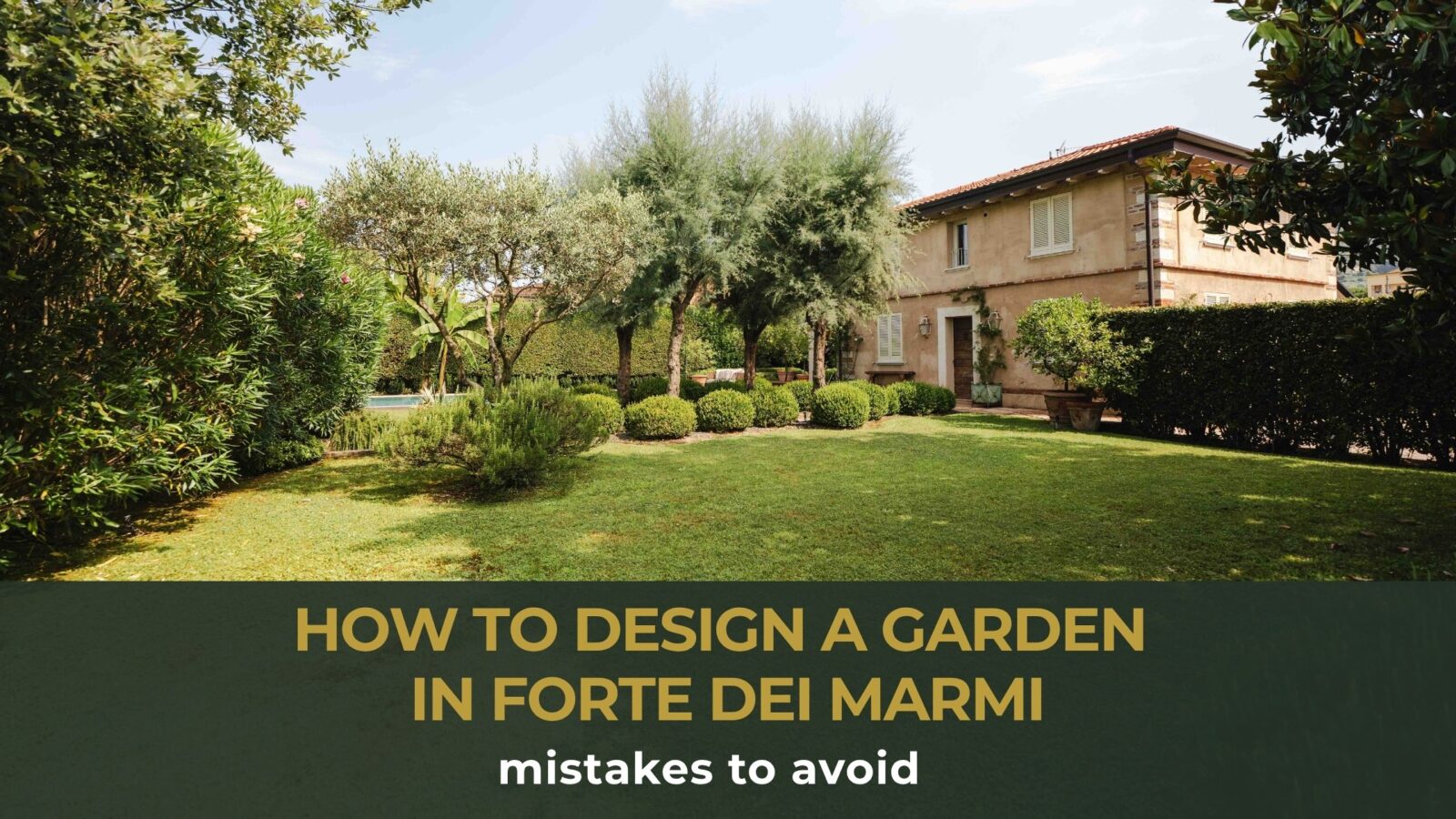
Why is designing a garden in Forte dei Marmi not something just anyone can do?
Every year, in Forte dei Marmi and the neighbouring towns of Versilia, dozens of private gardens are created or renovated. Some are successful projects, which over time become an integral part of the property’s identity, add value to the property and offer residents a high-quality experience in every season.
Others, designed without the necessary knowledge of the local area or without proper coordination between the various professionals involved, present problems that gradually emerge — unsuitable species, systems that consume too much energy, trees planted in insufficient space — and require costly corrective measures that could have been avoided.
The difference between the two outcomes almost never depends on the budget. It depends on the questions that are asked — and when they are asked.
A successful garden in Forte dei Marmi begins long before the first spade goes into the ground: it begins with an analysis of the site, an understanding of its specific hydrological and climatic conditions, and a dialogue between those who design the space architecturally and those who know the real-world conditions in which those choices will have to stand the test of time.
The specific characteristics of Forte dei Marmi
Forte dei Marmi is an area with very specific soil and climatic characteristics.
The coastal plain is almost entirely flat, with an average elevation just above sea level — which means a shallow aquifer, limited natural drainage, and the very real possibility that in many parts of the municipality, water is already found at a depth of fifty or sixty centimetres. When digging to plant a medium-sized tree, one easily enters the aquifer’s influence zone.
The soil is predominantly sandy — a legacy of its coastal origin — with high permeability which, on the one hand, aids drainage, but on the other reduces water retention capacity , making plants dependent on frequent irrigation unless the substrate structure is properly managed.
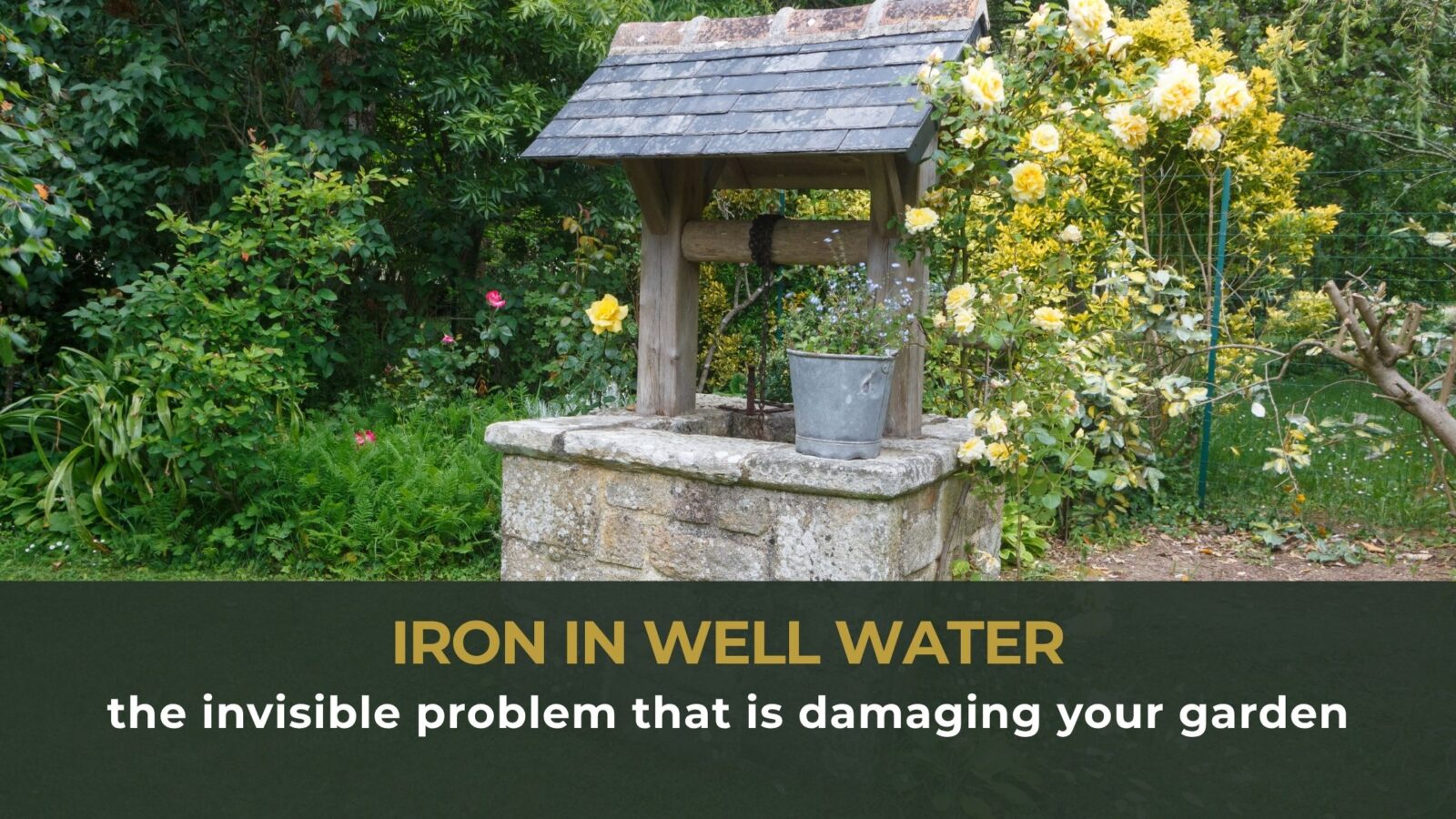
Added to this is the often complex quality of the groundwater: iron, manganese, and in areas closer to the sea, the risk of saline intrusion, which make chemical analysis of the well an essential step before any planting decision.
The libeccio completes the picture: the south-westerly wind carries salt aerosols that settle on the leaves of plants, with effects that vary considerably depending on the distance from the coast and the specific exposure of the property. Two gardens a hundred metres apart may have completely different botanical requirements simply because of their position relative to the prevailing wind direction.
Pre-planning coordination: the most important and most overlooked phase
One of the most common mistakes on building sites — and the most costly in the long run — is treating the garden as the final element of the project, when everything else has already been decided.
Swimming pool, underground garage, utility rooms, foundations: on a contemporary building site of a certain size, the subsoil is occupied by structures and services long before any thought is given to where the roots of the trees envisaged in the design or required by local planning regulations will go.
The result is predictable: trees are planted in whatever space remains, which is often insufficient for their future growth. A large tree cannot grow properly if its roots immediately encounter low walls, cisterns or foundations — and over time this leads to stunted growth, instability and plant distress.
The problem does not become apparent straight away, and by the time it does, those who carried out the construction work are no longer on site. It is the owner who pays the price.
The solution is not to complicate the process, but to coordinate it differently: involve the landscaping professional in the early stages of the project, determine where the trees will be planted before installing underground structures in the garden in Forte dei Marmi, and treat the garden as an integral part of the overall architecture rather than as an afterthought to be dealt with at the end.
Questions to ask before you start
Before meeting any landscaping professional, or before evaluating a quote, it is useful to have a clear understanding of some fundamental elements.
The quality of the available water: is a well or mains water used? If a well, has the water’s chemical composition been analysed? The depth of the water table: do you have information on the subsoil, or is a survey required? The current condition of the soil: has it been disturbed during construction work? Does it have drainage issues after heavy rain? Exposure to the wind: is the property on the seafront, or is it more sheltered?
These are not technical questions reserved for specialists: they are details that any owner can easily gather or verify, and which enable the professional to make the correct assessments from the very first site visit. Anyone designing a garden in Forte dei Marmi without knowing the answers to these questions is working in the dark — and in this area, working in the dark leads to mistakes that are difficult to correct.
How much time does a high-quality garden design require?
A well-designed garden is not delivered in an afternoon. The process from initial analysis to planting takes a few weeks for medium-sized projects, and several months for more complex properties.
It is time well spent: every week invested in the design phase saves months of corrective work during the maturation phase. And the maturation phase, in a garden, lasts for years — which means that an initial mistake continues to cost over time, whilst a well-executed project continues to bear fruit.
The best time to start planting is in autumn or late winter: mild temperatures and natural rainfall help the plants to take root, giving them the whole winter to develop their root system before facing the first stresses of summer. Those who wait until spring — or worse, summer — face far less favourable conditions and a much greater need for watering during those critical early months.
Are you planning or renovating a garden in Versilia?